Why are we afraid? An inquiry into fear, uncertainty and pain

Nicola Samori, Il rigore di Girolamo, 2016. Samori is an Italian artist who specializes in Baroque-inspired paintings that explore the nature of fear.

I think the title question is one that many of us have asked ourselves at some point or another in our lives: why are we afraid, truly? This question is primordial to understanding our actions and decisions because fear often seems to dominate our thought processes, and it appears inescapable. Many have said in the past that successful people know how to handle their fears, and I would agree – but how do they do it?

Uncertainty. More specifically, fear is intrinsically (and perhaps causally) tied to uncertainty in a way that renders uncertainty our key element of interest. Indeed, consider this interesting relationship. People tend to fear many things, but among the most prevalent are failure, the unknown and inadequacy (none mutually exclusive). All three have, as you have likely guessed, an aspect in common: they reside in the realm of uncertainty. One fears failure because she is uncertain that she will or has the capacity to succeed; one fears the unknown because, by definition, the unknown is clouded by the shadows of uncertainty; one fears inadequacy because she is uncertain that she has what it takes to be enough. In all of these cases, if the person knew with certainty that they would succeed, that the outcome would be good and that they were adequate, they would not be afraid.

The horrifying monster of uncertainty that looms above us with a wide, black smile is, unfortunately, immortal whilst we are mere mortals.

So, we can draw an important conclusion from this assessment: we ought to become the kind of person who is tolerant of uncertainty. Indeed, if I am able to handle the uncertainty with a high degree of confidence and stress management, then I will not be paralyzed by my fear; I will, in fact, surpass it. If, however, I cannot handle it, then I will likely succumb to this fear.

Think about it: your ability to think ‘I don’t know what the future holds in this situation but I am willing to accept all outcomes and deal with them as they arise‘ is an extraordinarily powerful mindset to have over ‘Oh goodness, what if I they ask me a question I didn’t prepare for and I mess up the job interview?‘ The former breeds calm and confidence whilst the latter inspires anxiety and self-doubt. The former is a person who is tolerant of the uncertainty associated with their uncertain future; the latter is a person who is anxious at the thought of not knowing what the future holds.

But it is easier said than done, isn’t it? Being able to tell yourself (and believe) that you can handle the uncertainty ahead takes a certain degree of confidence that is most effectively built by the acquisition of resilience. Put simply: launch yourself into uncertain situations and learn how to swim. The more you succeed, the more mental toughness you can nurture within yourself that, eventually, will result in a more confident self.

It is quite easy to see how these connect: having resilience means that you have certainty that you can achieve difficult things because you have done so in the past. Therefore, when a new uncertain (and potentially challenging) situation arises in the future, you are aware that you can handle it because you have done similar things in the past.

Now, this is not to say that fear can be completely eliminated. Sadly, it cannot. But learning how to manage our fears cannot be done by wishing them away. Fears have grip and they return every time that we let them, unwanted and suffocating.

Yet, resilience helps with another crucial factor in fear: the dreaded, terrible pain. I think anyone who tells me that they are not afraid of suffering is a liar, first and foremost to themselves. Whether the pain is physical or mental, we fear it because of its unpleasantness. Napoleon Bonaparte wisely said, “It takes more courage to suffer than to die,” because suffering represents prolonged pain whilst death may be terrifying for a moment, but in the next we are dead and we can no longer feel the fear and pain of life.

The saying that “Life is suffering” is, I would argue, overrated and over-simplified. Rather, it should read, “Life contains a certain measure of inescapable suffering which humanity will go through despite their best efforts to avoid or mitigate it” – though perhaps this one is less catchy than the former.

Needless to say though, the understanding that suffering is an inescapable reality of life helps us understand that, since it is inevitable, perhaps the wisest course of action is to learn how to handle it as well as expected rather than fear it. I often like to think about it in terms of a “pick your poison” kind of mentality: no matter what life you choose, you will experience pain – so embrace that which you choose to do and look ahead with the intent of handling whatever painful obstacles rise in your path.

Learning how to be tolerant of uncertainty – which helps us realize that whatever kind of suffering lies in the unknown darkness, we will overcome – is the best solution to the management of fear that I have developed thus far.

The horrifying monster of uncertainty that looms above us with a wide, black smile is, unfortunately, immortal whilst we are mere mortals. This is to say that no matter what we do, no matter how much technology we innovate, perfect visions into the future are not possible. If you are religious, perhaps you believe that God (or some divine entity) has such knowledge – but faith is coined ‘faith’ for the very specific reason that it does not have an undeniable factual basis, without which free will would be compromised. But this is a conversation for a later date.

The veil in Nicola Samori’s Il rigore di Girolamo is, in many ways, the dark shroud of uncertainty that prevents us from seeing anything beyond our immediate presence. But it is also a shroud that, instead of being a burden upon us, can be conducive to appreciating the beauty of life itself. Can you imagine how boring it would be to know everything? To never experience excitement, trepidation, surprise?

We ought to become the kind of person who is tolerant of uncertainty.

Uncertainty, whilst it does breed fear, also breeds the exciting and joyful nature of life. Think about being in school and being notified that your grade has been submitted for your latest paper. Perhaps you are nervous (I know I always was) but when you open the grade and it is an A+, the next thing that floods through you is profound relief and pride. If you had known your grade though, you would have not felt fear – but neither would you have felt joy, gratitude, relief.

Those who know me know that I am an adamant proponent of balance. As an Aristotelian, the Golden Mean in ethics shines my path in life – including with fear and uncertainty. There is reason to be afraid, but there is also reason to be calm, and finding that fine line between a reasonable (and in fact, productive) level of fear and confidence has significantly increased my happiness and quality of life.

Perhaps it will with yours, too.
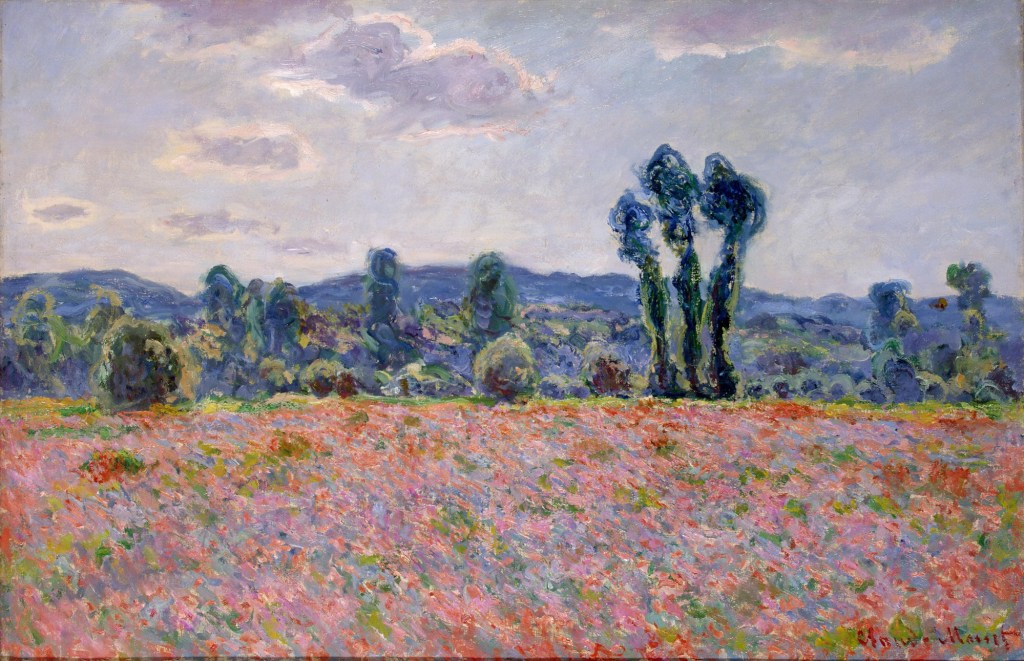
The losing battle of our reason and the mystical power of emotions

Poppy Fields by Monet

We often live with the idea that our reason should take precedence over our emotions. Otherwise said, rationality is above emotionality because emotions are fickle things, and a rational argument is more difficult to dispel.

But is this the case? Let us attempt to better understand the power dynamics between reason and emotions, and importantly, figure out how this affects us as individuals.

Now, the truth seems to be this: reason is so terribly weak in the face of emotions. You may have plethora of rational arguments in favour of something, yet the moment that your emotions peak their heads, every one of those arguments shatters.

Consider a mutual break-up with a partner who you loved. You have a whole list of reasons why it is best if you and them separate for your own future happiness. Yet, when it comes down to it and you see them for the last time, the world seems to collapse onto itself, you’re losing air and no rational argument can soothe the agony in your heart.

I use this example because many people can relate to it and it is the prime situation where rationality and emotions oppose each other. The reality, I believe, is that we are creatures driven by emotions. Even if our rationality sets us apart from other living beings, it is also not a faculty that we can rely on. In the battle between emotions and reason, emotions always seem to win.

You might say, “Well this isn’t true, sometimes people do break up over rational reasons, despite their emotional state.” This is true, but the reality is that no matter how rational your arguments are, the suffering that suffocates you in the days, weeks, months and even years after the separation is incomparably higher than the wavering certainty of your rationality.

Yet, when it comes down to it and you see them for the last time, the world seems to collapse onto itself, you’re losing air and no rational argument can soothe the agony in your heart.

So the important question is the following: why are emotions so powerful? I think we can agree that they are fleeting things. Even the most powerful feelings such as love or hatred will eventually dim with time (with very few exceptions). It is the nature of emotions to be so, and it is crucial that they be.

Fickle does not necessarily involve something negative. Imagine being heartbroken forever – or loving someone forever despite them being abusive. I think at first sight, it seems that emotions always get in the way. They bring us pain, they mislead our rational decisions. Yet, there must be a great reason for which emotions are so powerful; why else would have rationality not overtaken us entirely?

In the battle between emotions and reason, emotions always seem to win.

There is good reasons for it, I would say: our emotions are the catalysts for change on our lives, for the drive that we feel – for everything that matters, emotions ought to and always will triumph.

Think about it this way: without emotions, if you were a purely rational being, none of your rational decisions would matter to you. They would be simple computations, numbers and letters on a spreadsheet of reason. While reason has allowed us to evolve and to discover knowledge that we could only have dreamed about, the catalyst for those discoveries was not reason. It was emotion.

Ambition to discover truths is an emotion which, accompanied with reason, has resulted in extraordinary things. Perseverance, determination, willpower, empathy and sacrifice: these are all qualities or states that are driven almost entirely by emotions. When someone risks their lives to save someone else, they do it because they know that they could never live with the guilt of having done nothing – irrespective of whether it rationally seems like the most reasonable course of action.

This being said, it now seems that the commonly held view of ‘ignore your feelings in favour of reason, because emotions will lead you astray’ falls apart. Indeed, it rather seems that emotions ought to play a part in your decision making insofar as they align with your reason.

Reason is only instrumentally valuable to us, whereas emotions are intrinsically valuable.

For instance, if you are in a relationship with a partner but you know that it is in their best interest for both of you to part ways (insert reasons x and y), but your emotions are begging you to stay, it might be wiser to listen to reason. Why? Because emotions are fickle, and when your feelings change, your reason will not, and you will be stuck with a worse problem.

However, if you find yourself at peace with the decision to break up with your partner, and the rationality seems to align with those emotions, allow your emotions to help propel your decision.

Of course, there are exceptions. Sometimes, in cases of extreme self-sacrifice, emotions will be the driving force behind the action. In cases of extreme ambition (if you pursue something that, rationally, seems impossible), emotion is the sheer driving force and when success arises, it’ll have all been worth it.

So I can probably alter my earlier claim to say the following: emotions ought to play a part in your decision making insofar as (1) they align with your reason or (2) you are willing to take the risk posed with acting against rationality.

In any case, the tension between emotions and reason seems to be clearer, albeit never clear enough. This said, it would seem that emotions are stronger because they are the driving force of our humanity. Let me put it this way: reason is only instrumentally valuable to us, whereas emotions are intrinsically valuable.

What does this mean, exactly? Our reason is only good insofar as it allows us to achieve good things. It is only good in virtue of something else, I would say. Emotions, however, have intrinsic value in that it is good in itself to feel love, happiness and joy. It might be the case that emotions are good in themselves and good for something else – but what? It could be that there is a class of instrumental and intrinsic emotions that are lesser than the emotions which have only intrinsic value (or, at least, the one which does). For instance, euphoria and joy are more fleeting than love and fulfillment.

If you’re wondering, I chose Monet’s ‘Poppy Fields’ because I think it accurately represents the acute presence of emotions while being (sometimes) aligned with reason (soldiers wanting to defend their country while also being both terrified and brave).

Now, tell me: have you ever thought about this? Have you ever felt like your emotions were behind the wheel, even if you had promised yourself you would be emotionless and rational?

How well were you able to keep it together?

Narcissus and his reflection: here is the painting that sets the tone for 2021

Narcissus by Caravaggio Wall Art from Truly Art | Michelangelo, Caravaggio,  Narcissus
‘Narcissus’ by Caravaggio

When you look in the mirror, what do you see? The firsthand answer is simple: your reflection. You know, of course, that this answer is not the one I am asking for – nor the one that you wished to answer.

Welcome to 2021, dear reader. May this year be better than the last, which is not asking much. But alas, with new year resolutions being thrown left and right, there is a more fundamental question that we ought to ask ourselves. It is well and good to set goals and habit systems – become more financially stable, lose some weight, eat better – but why? Why set these goals? Especially after a hard and arduous year like 2020, where many of us were slapped in the face with the reality of the pandemic, it seems only fair (and essential) to press the ‘reset’ button and ask ourselves some difficult questions.

The answer to the aforementioned ‘why’ is often the following: “I wish to better myself.” This is a good response, and one I hope most people will have. Personal betterment is essential to progress and positive change. So yes, please achieve these goals so that you may become better by the end of the year.

Even further though, I would like to dig. Why even think of bettering yourself? Why is it so important to people that they set goals with this hope, so that they are better, so that they are proud of themselves by December?

Because, fundamentally, those who believe that they would like to better themselves also believe that they are fundamentally flawed. Of course, every person to a certain degree knows that they are imperfect. Such is the nature of humanity and we cannot change it. But the recognition of these flaws is imperative to change because it is entirely possible to set goals without addressing these flaws, or at least, knowing your flaws are you begin working toward that goal.

Now, what I was trying to insist on is, then, quite simple: any goal, whether it be set during the new year or not, ought to reflect our flaws. It ought to reflect the true imperfections of our individual natures such that the said goal does not diverge from the flaws that one is attempting to correct. In that case, the goal will be largely ineffective, if not completely useless. At the very least, it will not produce in you the fulfillment that you are seeking because it will not target what you, fundamentally, are attempting to achieve.

Here can be observed the relevance of Narcissus. In the Baroque painting, Narcissus is staring at himself, seemingly fascinated with his reflection. Certainly, it seems that – true to his name – Narcissus is admiring his beauty and the extraordinary nature of his being. It is unclear, upon my analysis, if he sees or acknowledges his flaws. Either way, Narcissus in this painting is doing something that we should do: take a long, hard and honest look in the mirror this year.

Now, what I was trying to insist on is, then, quite simple: any goal, whether it be set during the new year or not, ought to reflect our flaws.

Not unlike Narcissus, however, the acknowledgement of our flaws is more difficult than we think. Taking a hard look in the mirror is no trivial thing, but our personal development, progress and ability to become better people relies on accepting the haunting imperfections that permeate the dark corners of our minds.

A goal and a system of habits that is not designed to correct a particular flaw will unfortunately not be completely satisfying. So, if you’re making goals this year or in the next years, step one is necessarily going to be a hard look in the mirror. You will find that the more you are able to acknowledge and accept your flaws as they are, the easier it will be to correct for them because their existence will hurt you significantly less.

For instance, I know I am quite a naturally lazy person. It is the worst contributor to my tendency to procrastinate. So when I told myself that I wanted to be more organized and not allow my room to become a mess anymore, I didn’t start with just telling myself that, every day, I would keep tidy up my room before bed. I began with setting times during which I would tidy up the strewn clothes in my room. I promised myself I would do it immediately rather than later – because I knew that later never happened. My goal, and most importantly, the way that I established I would achieve my goal, are oriented to the fact that I am lazy. It will correct for that laziness, so by the time that I have built a healthy habit, the goal and I will be entirely satisfied.

My point is that, if I didn’t acknowledge my laziness as an integral part of my inability to be organized, I never would have set the goal, and certainly never set the systems that help make that goal succeed.

This is a trivial example, but you see my point. Sometimes, goals will be so trivial that the need for it to reflect a deeper part of ourselves is rendered nil. However, more often than not, this is not the case.

You may say, ‘But aren’t our goals just intuitively set to correct our flaws? What is the need for the personal reflection, then?’ I would respond that you are entirely correct. If your goal is intuitively oriented toward correcting a flaw, this is great – but you are missing a piece of the puzzle. If you don’t know exactly why you are working toward said goal, then your motivation will disappear and the goal will not be achieved. This is crucial. The why is fundamental to your success, and taking a long look in the mirror will tell it to you, if you listen.

Now – how do you find the why? This is the million dollar question, isn’t it? Most self-help books won’t tell you because it seems to be so intrinsically connected to your emotions that, prima facie, no one can tell you how to reach it.

I’m not here to tell you, either. If I knew the answer to finding the ‘why,’ I would be writing a bestselling self-help book (I’m not). I will ponder the question and maybe I’ll find the answer someday. If I do, I’ll make sure to write about it. Regardless, there is something to be said about finding that ‘why’ without which accomplishing anything challenging will be impossible.

I would wager, though, that giving ourselves a hard look in the mirror might be a step toward finding that million-dollar answer.

So, let us stare at our reflections not with fear of what we will find, but with the hope that what we find can be corrected, or at the very least, accepted. Cheers to a better, more introspective year!

Hi, hello, good day: an introduction

Welcome to The Penned Poppy, otherwise known as my personal blog. I’m here because I want to share meaningful things with you – I want to share some of the beauty that I am fortunate enough to experience, and perhaps some of the ugliness too. I want to share some humanity, some experiences, some well-reasoned thoughts on a variety of topics that might pique your interest.

You may wonder: why The Penned Poppy? Poppies are actually very meaningful to me. They evoke nostalgia, sacrifice, recognition of the gift of life, gratitude – they represent the growth of life after the ravages of death, a symbol of hope. As a Canadian and a military member, the poppy is a mark of Remembrance. But for me personally, it also marks the change from my childhood to adulthood, from immaturity to maturity. The poppy set the tone for the writer and thinker that I am today.

With respect to this blog, I am concerned with existential questions, inquiries about various kinds of stories and elements of the world, poetry and art. I am further concerned with ethics and how they can be observed.

Some of my posts will be more lighthearted while others will be heavier and more provocative. My aim is to make you think about an issue differently, more deeply than you already have. I want to raise ideas, generate conversation; I wish to impress upon the world a fleeting idea of something you may not have considered in the past.

I am most passionate about intricate ideas that refuse to leave my thoughts. I hope that you are too; if you are, then you have come to the right place.

I will post weekly, perhaps more or perhaps less.

Well, I believe this is all I have to say, here. May this be the beginning of a beautiful unfurling of ideas and thoughts.

D. C. Logojan