We often live with the idea that our reason should take precedence over our emotions. Otherwise said, rationality is above emotionality because emotions are fickle things, and a rational argument is more difficult to dispel.
But is this the case? Let us attempt to better understand the power dynamics between reason and emotions, and importantly, figure out how this affects us as individuals.
Now, the truth seems to be this: reason is so terribly weak in the face of emotions. You may have plethora of rational arguments in favour of something, yet the moment that your emotions peak their heads, every one of those arguments shatters.
Consider a mutual break-up with a partner who you loved. You have a whole list of reasons why it is best if you and them separate for your own future happiness. Yet, when it comes down to it and you see them for the last time, the world seems to collapse onto itself, you’re losing air and no rational argument can soothe the agony in your heart.
I use this example because many people can relate to it and it is the prime situation where rationality and emotions oppose each other. The reality, I believe, is that we are creatures driven by emotions. Even if our rationality sets us apart from other living beings, it is also not a faculty that we can rely on. In the battle between emotions and reason, emotions always seem to win.
You might say, “Well this isn’t true, sometimes people do break up over rational reasons, despite their emotional state.” This is true, but the reality is that no matter how rational your arguments are, the suffering that suffocates you in the days, weeks, months and even years after the separation is incomparably higher than the wavering certainty of your rationality.
Yet, when it comes down to it and you see them for the last time, the world seems to collapse onto itself, you’re losing air and no rational argument can soothe the agony in your heart.
So the important question is the following: why are emotions so powerful? I think we can agree that they are fleeting things. Even the most powerful feelings such as love or hatred will eventually dim with time (with very few exceptions). It is the nature of emotions to be so, and it is crucial that they be.
Fickle does not necessarily involve something negative. Imagine being heartbroken forever – or loving someone forever despite them being abusive. I think at first sight, it seems that emotions always get in the way. They bring us pain, they mislead our rational decisions. Yet, there must be a great reason for which emotions are so powerful; why else would have rationality not overtaken us entirely?
In the battle between emotions and reason, emotions always seem to win.
There is good reasons for it, I would say: our emotions are the catalysts for change on our lives, for the drive that we feel – for everything that matters, emotions ought to and always will triumph.
Think about it this way: without emotions, if you were a purely rational being, none of your rational decisions would matter to you. They would be simple computations, numbers and letters on a spreadsheet of reason. While reason has allowed us to evolve and to discover knowledge that we could only have dreamed about, the catalyst for those discoveries was not reason. It was emotion.
Ambition to discover truths is an emotion which, accompanied with reason, has resulted in extraordinary things. Perseverance, determination, willpower, empathy and sacrifice: these are all qualities or states that are driven almost entirely by emotions. When someone risks their lives to save someone else, they do it because they know that they could never live with the guilt of having done nothing – irrespective of whether it rationally seems like the most reasonable course of action.
This being said, it now seems that the commonly held view of ‘ignore your feelings in favour of reason, because emotions will lead you astray’ falls apart. Indeed, it rather seems that emotions ought to play a part in your decision making insofar as they align with your reason.
Reason is only instrumentally valuable to us, whereas emotions are intrinsically valuable.
For instance, if you are in a relationship with a partner but you know that it is in their best interest for both of you to part ways (insert reasons x and y), but your emotions are begging you to stay, it might be wiser to listen to reason. Why? Because emotions are fickle, and when your feelings change, your reason will not, and you will be stuck with a worse problem.
However, if you find yourself at peace with the decision to break up with your partner, and the rationality seems to align with those emotions, allow your emotions to help propel your decision.
Of course, there are exceptions. Sometimes, in cases of extreme self-sacrifice, emotions will be the driving force behind the action. In cases of extreme ambition (if you pursue something that, rationally, seems impossible), emotion is the sheer driving force and when success arises, it’ll have all been worth it.
So I can probably alter my earlier claim to say the following: emotions ought to play a part in your decision making insofar as (1) they align with your reason or (2) you are willing to take the risk posed with acting against rationality.
In any case, the tension between emotions and reason seems to be clearer, albeit never clear enough. This said, it would seem that emotions are stronger because they are the driving force of our humanity. Let me put it this way: reason is only instrumentally valuable to us, whereas emotions are intrinsically valuable.
What does this mean, exactly? Our reason is only good insofar as it allows us to achieve good things. It is only good in virtue of something else, I would say. Emotions, however, have intrinsic value in that it is good in itself to feel love, happiness and joy. It might be the case that emotions are good in themselves and good for something else – but what? It could be that there is a class of instrumental and intrinsic emotions that are lesser than the emotions which have only intrinsic value (or, at least, the one which does). For instance, euphoria and joy are more fleeting than love and fulfillment.
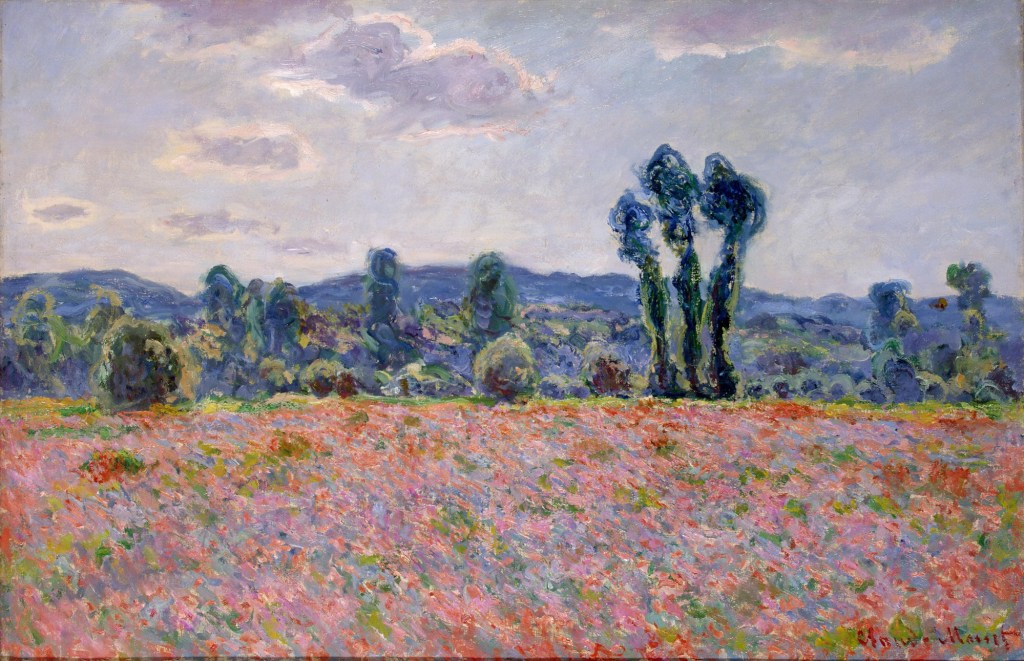
If you’re wondering, I chose Monet’s ‘Poppy Fields’ because I think it accurately represents the acute presence of emotions while being (sometimes) aligned with reason (soldiers wanting to defend their country while also being both terrified and brave).
Now, tell me: have you ever thought about this? Have you ever felt like your emotions were behind the wheel, even if you had promised yourself you would be emotionless and rational?
How well were you able to keep it together?

 DENISA | D. C. LOGOJAN
Strong case for keeping our emotions “in the loop” when it comes to decision-making. Love it!
LikeLike